Running network cable at home: stable internet in every room
Wireless networks go a long way, but for home offices, TVs, games consoles and access points, a wired network cable is still the most stable choice. Here is what the job involves, what affects the price and how the RUT deduction works.
By the Fixtorget editorial team · Updated 8 November 2026 · 3 min read
What does network cabling involve?
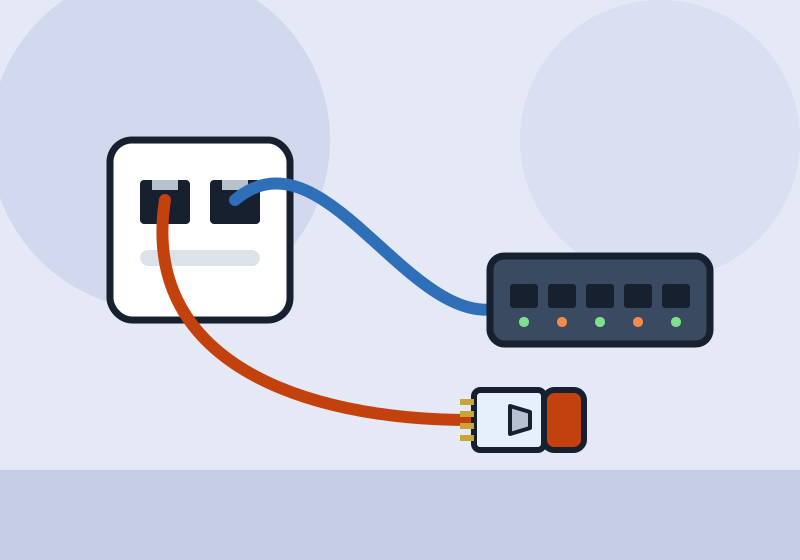
Network cabling means running fixed cable from a central point, often where the fibre or broadband comes in, out to outlets in the rooms where you need a connection. The cables terminate in network outlets in the wall and in a cabinet or patch panel by the router, where a switch distributes the traffic.
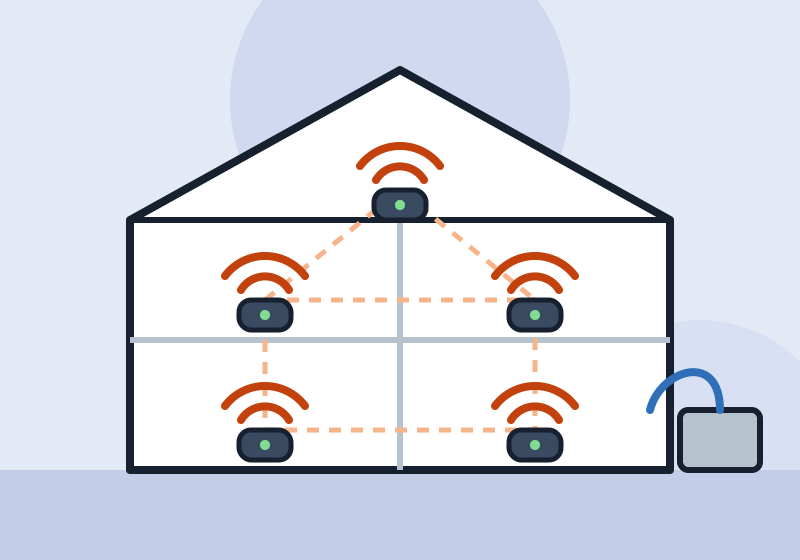
The result is a stable, fast connection that is not affected by walls, distance or the neighbours' wireless networks. It is also the best foundation if you want several wireless access points covering the whole house.
When is cable worth it?
- You work from home and need stable video calls.
- You have a TV, media player or games console that streams a lot.
- The house has thick walls, several floors or a basement where the wireless network does not reach.
- You want to set up wireless access points connected by cable rather than wireless mesh.
- You are renovating and have the walls open anyway.
If your main problem is wireless coverage, you can also read our guide on Wi-Fi at home, but in many cases cable to a few strategic points is the best solution.
Planning and preparation
Decide where the network will start from, often where the fibre comes in, and which rooms should have outlets. Think about where the TV, desk and any ceiling access points will be. It is wise to run more cables than you need today, since the cost of an extra cable is small while the work is under way.
Choose a cable category that can handle the speeds you will need in the future and ask the installer for a recommendation. A ventilated space for the router and switch is also worth planning for.
Rules and safety
Network cable is extra-low voltage, and running data cable does not require the same authorisation as mains installations. However, if new power sockets are needed for the switch or router at the network cabinet, they must be installed by a registered electrical installation company.
Network cable should not be run tightly together with power cables in the same conduit. In apartment buildings and tenant-owned apartments, drilling between apartments and through floor structures often needs the housing association's approval, and penetrations must be sealed so that fire protection is not compromised.
What affects the price?
Ask for a quote after the installer has seen the home or received photos and a floor plan. The factors that matter most:
- Number of outlets and cable length.
- Concealed wiring in the wall or surface-mounted trunking.
- Number of floors and how easy it is to get between them.
- Whether a switch, patch panel and network cabinet are included.
- Wall material and the need for drilling.
RUT deduction for networks
According to Skatteverket, installing a network with associated cables and outlets in the home is covered by the RUT deduction for IT services. The deduction is 50 % of the labour cost, and ROT and RUT combined may total no more than SEK 75,000 per person per year. The work must be carried out in or in close proximity to the home. Materials such as cable, outlets and switches do not qualify. Digging for broadband or fibre on the plot may instead qualify for the ROT deduction.
What the quote should include
- Number of outlets and which rooms.
- Cable type and category.
- Concealed or surface-mounted wiring.
- Switch, patch panel and any cabinet.
- Testing and labelling of each cable.
- Labour and materials separately, plus the estimated RUT deduction.
Also ask whether the installer tests every connection after installation, and how the cables are labelled so you know which outlet goes where.
Common mistakes and quotes via Fixtorget
Common mistakes are running too few cables, forgetting outlets for ceiling access points and putting the network equipment in a cramped, hot cupboard without ventilation.
When you post the job on Fixtorget, describe the size of the home, the number of floors, where the fibre comes in and where you want outlets. The companies that get in touch can ask follow-up questions in the chat and send a cost specification that you approve in the portal.
Frequently asked questions
Do I get a RUT deduction for network cabling?
Yes, installing a network with cables and outlets in the home is covered by RUT for IT services. The deduction applies to the labour cost, not the materials.
Do I need an electrician for network cable?
Data cable is extra-low voltage and does not require electrical installer authorisation. New power sockets for the network equipment must, however, be installed by a registered electrical installation company.
How many network outlets do I need?
Plan for outlets where you have a TV, desk and games console, plus points for wireless access points. It is worth running a few extra while the work is under way.
This information is general and may change. Always check the current rules with the relevant authority, for example Skatteverket, Elsäkerhetsverket or Transportstyrelsen.
Get quotes from companies near you
Describe the job in a few minutes – free and with no obligation.
Post a job