Paving and stone laying – how to build a patio that lasts
A good-looking patio, driveway or path stands or falls with the groundwork. Here we go through how paving is done, what affects the price, what the quote should include and which mistakes lead to subsidence.
By the Fixtorget editorial team · Updated 8 November 2026 · 3 min read
What paving involves
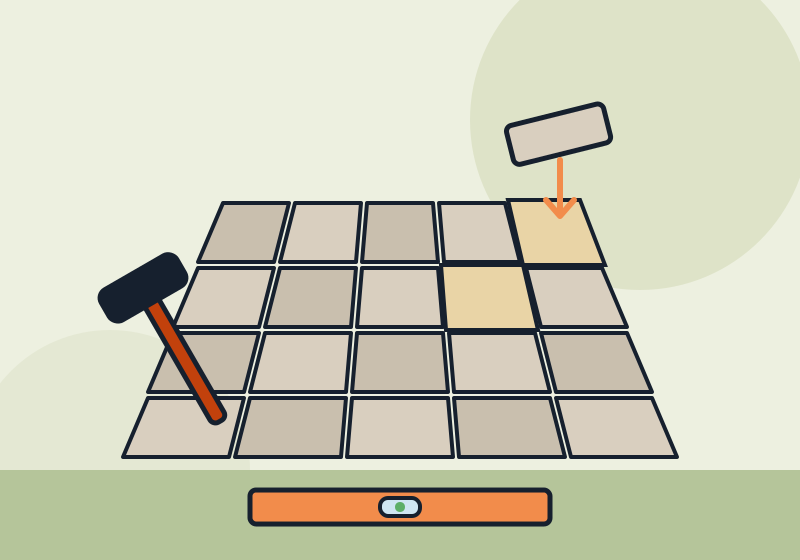
Paving or stone laying covers concrete slabs, block paving, natural stone and setts for patios, paths and driveways. The laying itself is only the visible part of the job – most of the work lies beneath the surface.
- Excavation: soil and vegetation are removed to the right depth.
- Geotextile where needed, to separate the soil from the sub-base.
- A sub-base of crushed aggregate compacted in several layers.
- A bedding layer of stone dust or grit that is levelled.
- Laying of slabs or stone, edge restraints and jointing.
What affects the price?
The price is often calculated per square metre but is affected by many factors. Ask for a quote after a site visit.
- The size and shape of the area – lots of corners and curves require more cutting.
- Type of material: concrete slabs, block paving or natural stone.
- Whether the surface must take vehicle traffic, which requires a thicker sub-base.
- Ground conditions, excavation depth and removal of spoil.
- Access for machinery and space to store materials.
- Removal of existing surfacing.
Preparation and planning
- Decide how the area will be used: patio, path or driveway for cars.
- Plan the fall so that rainwater is directed away from the house, never towards the foundation.
- Find out where electricity, water, drainage and fibre cables run before anyone digs.
- Check the property boundary if the area will be close to the neighbour.
- Plan for surface water – large hard surfaces may need a drain or soakaway.
Rules and permissions
An ordinary patio or path at ground level does not normally require a building permit, but there may be exceptions, for example if the ground level is changed significantly, if you live in an area with special provisions in the detailed development plan or if you are making a new exit onto the street. Contact the municipal building committee if you are unsure. A new driveway exit may also require contact with the road authority.
ROT or RUT deduction?
Laying a new patio, path or driveway with slabs or stone does not normally qualify for either the ROT or the RUT deduction. Some groundwork next to the house, such as drainage, can qualify for ROT. The rules can be detailed, so check with Skatteverket or ask the company how they assess your particular job before counting on a deduction.
What the quote should include
- The size of the area in square metres and which material is included.
- Excavation depth, sub-base thickness and compaction.
- Whether geotextile, edge restraints and jointing sand are included.
- Removal of spoil and demolition material.
- How the fall and drainage are handled.
- Schedule and warranty on the work.
Questions to ask and common mistakes
- How thick a sub-base do you lay for the load the surface must take?
- How do you compact it and in how many layers?
- Can you show previous jobs of the same type?
- Do you have liability insurance?
The most common mistakes are a sub-base that is too thin or poorly compacted, leading to subsidence, a fall that directs water towards the house, missing edge restraints so the stones drift apart, and jointing sand that is not topped up after the first period.
Also think about maintenance once the job is finished. Jointing sand gets washed and swept away over time and needs topping up, and weeds in the joints are easier to keep on top of if dealt with early. Be careful with pressure washing near the joints. Choose materials that suit how the area will be used – a light stone can be beautiful but shows dirt and stains more clearly, while a rougher surface gives better grip when it is slippery. Ask for a material sample before you decide.
Getting quotes through Fixtorget
Describe the area and attach photos and approximate measurements when you post your request for free. Up to four vetted companies can contact you. On the company profile you can see whether the company is verified, whether its liability insurance has been reviewed and what reviews previous customers have left.
Frequently asked questions
How deep do you need to dig?
It depends on ground conditions and whether the surface must take vehicle traffic. A driveway needs considerably more sub-base than a path. Let the company assess it on site.
Do I get the ROT deduction for paving?
Normally not for laying a new patio or driveway. Check with Skatteverket if you are unsure.
Do I need a building permit for a patio?
Usually not for a patio at ground level, but there may be local provisions. Contact the municipal building committee if in doubt.
Why do the slabs sink after a while?
Usually because the sub-base is too thin or poorly compacted, or because water is standing beneath the surface.
This information is general and may change. Always check the current rules with the relevant authority, for example Skatteverket, Elsäkerhetsverket or Transportstyrelsen.
Get quotes from companies near you
Describe the job in a few minutes – free and with no obligation.
Post a job